
Foundation block wall installation in Corona CA - a reinforced wall built to stay put
Planning an addition, a basement or a wall to hold back a slope? We build reinforced block walls with steel, grout and drainage planned first.
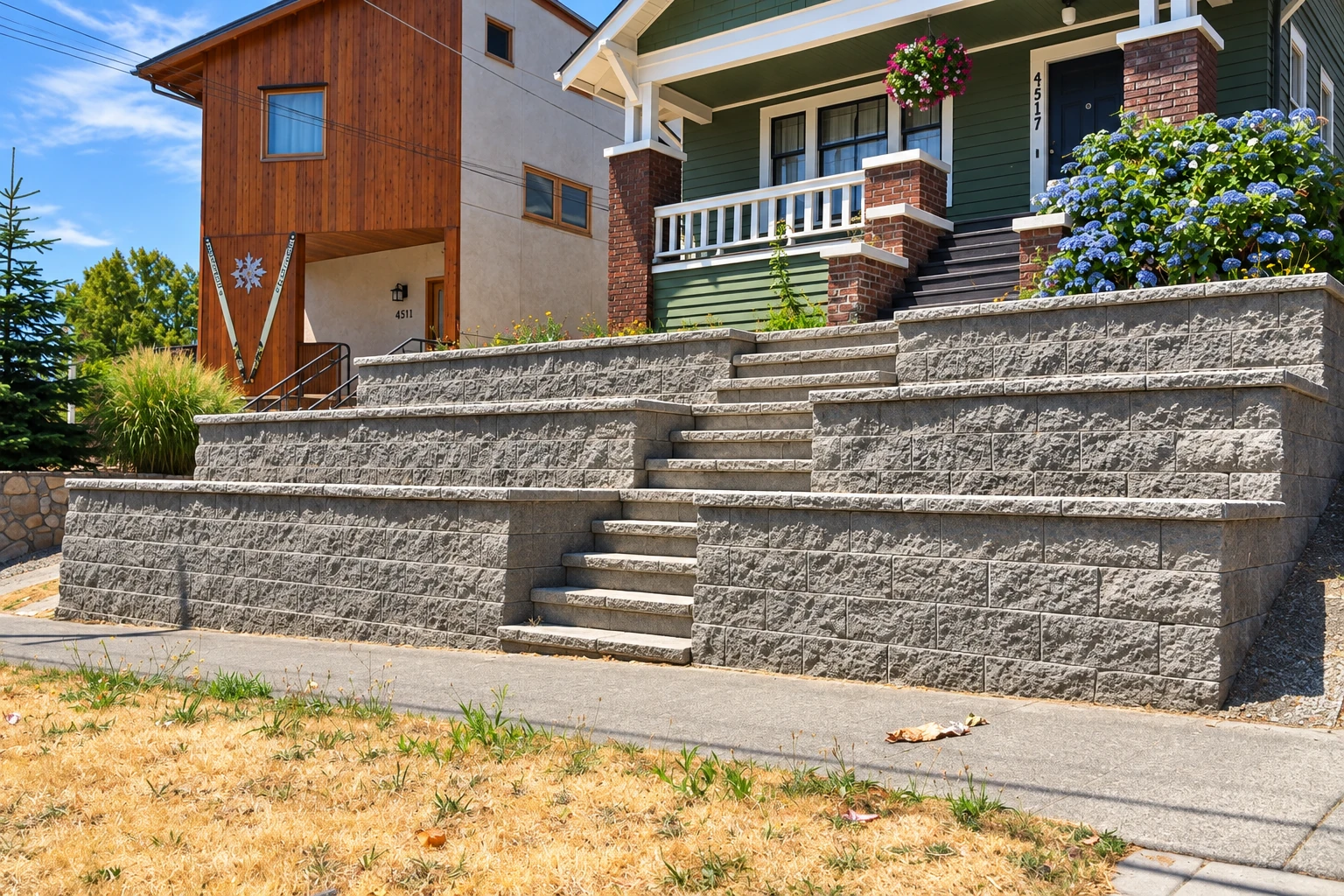
- Licensed and fully insured.
- Free estimates at your property.
- Expect a reply within 1 business day.
What goes into a foundation block wall in Corona?
A foundation block wall is a reinforced wall laid from concrete block with steel set inside it and grout poured around the steel, so the block and steel work as one against the load. At Keystone Corona Masonry and Concrete we build them for Corona homes as lower-level and basement walls, retaining walls and freestanding garden walls.
The first thing I ask is whether your wall sits below grade under a building or stands on its own in the yard, because a wall holding up part of a house against damp soil needs more thought about water than a garden wall or a retaining wall usually does. The price moves with the wall's length and height, how deep we dig, how many of the block's hollow cores get filled with grout and how the back of the wall is protected from water. The schedule turns mostly on how much digging the site needs and on the city inspections between stages. We're based in Corona and work across the cities around it, and when I come out I'll walk the job with you and put in writing what your wall includes.
When does a property need a foundation block wall?
A slope crowding the yard
If soil keeps sliding toward your patio or the side of the house after a rain, the slope usually needs a wall built to hold it. Every season you wait, more soil moves down, and that's more to dig out and haul away before we can start.
Plans for a lower-level room
When you're adding a room or a garage that sits partly below the ground, those walls have to carry the house and hold back the soil and water behind them. Settling the wall and its water protection early keeps you from changing plans once the hole is dug.
An old wall leaning out
A block wall that leans, bulges or cracks along its joints often went up without enough steel or grout inside. Waiting lets it lean further, and a wall that finally lets go takes the fence, plants and sometimes part of the neighbor's yard with it.
How we handle foundation block wall installation
We start by marking out the wall and digging the trench, then set the steel and lay the block course by course, with bands of steel and grout called bond beams tying it together partway up and at the top. We leave the wall open for each inspection before it's grouted or capped, because once grout fills the cores nobody can see whether the steel is where it belongs. Before we decide how to protect the back of the wall, I talk through with you how water will drain away from it, since that choice is easy to make now and hard to fix later. Then we grout, cap the wall, place the backfill and clean up the site.
The ground around a new wall gets torn up anyway, so it's a good time to plan what sits next to it. If the wall faces a patio, we can carry the block into outdoor kitchen masonry like a grill island, and walkway construction along the base can go in once the backfill has been placed.
Partially grouted wall
Grout goes only into the cores that hold steel, so it suits a wall where the vertical bars are spaced well apart and filling every core would add grout the wall doesn't need. We block off the empty cores so the grout stays where the steel is.
Solidly grouted wall
Every core gets filled, which makes sense when the vertical steel sits close together. Masonry guidance says that in that case filling every core may be the faster and more economical choice, and that's usually the way I'd go on a wall like that.
Get a written estimate for your new block wall
Send the form and we'll reply within one business day, by phone or by message. I'll set a time to come out, walk the site with you and give you a free written estimate, with no obligation to go ahead.
(951) 393-1203Building a foundation block wall in Corona
The City of Corona Building Division checks a combo block wall, a block wall built on top of a short retaining wall, in stages. Its wall detail calls for an inspection of the clean trench with the steel in place, then each mid bond beam before it's grouted, then the top of the wall before grout, and once more after grout before the wall is capped. That sequence is set for those walls, so we plan our days around each stop and don't pour ahead of the inspector.
The city also publishes standard designs for garden walls, pilasters, a block wall up to 7 feet tall sitting on a retaining wall up to 2 feet, and retaining walls up to 5 feet 4 inches, and you can ask the city whether your planned wall fits one of Corona's wall standards. A lot of yards here are graded into flat pads with slopes between them, and we see the same kind of lot on jobs in Eastvale and Temescal Valley.
What happens after you call about a block wall?
Call or send a message
Call (951) 393-1203 or use the form, and we get back to you by phone or message, whichever way you reached us. We'll set a time for me to come out.
I walk the site with you
I look at where the wall goes, how the ground slopes and where water heads, then write up what the work includes, from the steel and grout fill to how the back gets protected. Having it in writing lets you see exactly what you're paying for.
We build, then walk it together
Our crew does the work and I check it as it goes, with the wall left open at each stage for the city inspector. Once it's capped and backfilled, we walk the finished wall with you before we pack up.
Frequently asked questions
How much does a foundation block wall cost per square foot?
Installing a concrete block wall usually costs about $16 to $19 per square foot across the US, and that's a national figure, not a Corona price or ours. A below-grade wall with deep digging, solid grout and waterproofing pushes toward the high end, while a short garden wall sits nearer the low end. Your written estimate gives you the number for your own wall.
Does a block wall contractor in Corona need a license?
Yes, in California a wall builder needs a Contractors State License Board license when the job totals $1,000 or more or brings on extra workers. That covers nearly any foundation or retaining wall, so ask to see the license before you sign anything.
Does a basement block wall in Corona need waterproofing?
It does if water can build up pressure against it. Building codes typically call for waterproofing where that pressure may occur and dampproofing, a lighter coating, where it won't. A high water table or backfill that drains poorly, like heavy clay, is what usually creates the pressure, so walls on those sites call for waterproofing.
What is the best way to waterproof a block foundation wall?
On a wall that needs it, I'd pick a sheet membrane or panel system over a brushed or sprayed coating, because it depends less on how carefully the crew works and preps the surface. Many membrane systems also hold together better if the wall settles or moves. Dampproofing alone suits a wall backed by gravelly fill that drains into a drain line under the soil, which is why we sort out drainage first.
How do I know how much steel a block wall needs?
Part of the answer comes from earthquake risk, because codes call for more steel reinforcement as that risk rises. That seismic steel is a minimum the wall has to have no matter what loads it's figured to carry, so even a modest wall can need more steel than its size suggests. I'll go over the steel layout with you when I write the estimate.
Should I ask a Corona contractor for proof of workers' comp?
Yes, ask to see the workers' compensation coverage before work starts. Corona's building handout says every contractor and subcontractor on a job complies with the state Labor Code on workers' comp, so it's fair to ask whoever you hire to show it.
Corona, CA
Tell us what your wall has to hold
Call (951) 393-1203, email sales@coronamasonry.com or use the form with what the wall is for, its rough length and height, and whether it holds back soil, so I arrive already thinking about your job.